KEY TAKEAWAYS
- Steroid creams are safe and effective treatments for many inflammatory skin conditions when used as directed.
- Different steroid creams come in different strengths, and the most suitable one depends on your skin condition, the area being treated, and your doctor's recommendation.
- Using steroid creams for longer than recommended or applying more than necessary may increase your risk of side effects, including skin thinning and irritation.
- Most side effects are uncommon when steroid creams are used correctly under medical supervision.
- If your skin condition keeps returning or does not improve, it's important to seek medical advice rather than continuing treatment on your own.
Perhaps you've heard someone warn you that steroid creams "thin your skin" or that your skin will become "dependent" on them. Maybe you've even stopped using one because you were worried about the side effects.
If that sounds familiar, you're not alone.
While some people avoid steroid creams altogether, others continue using them for months without realising that they're meant to be short-term treatments for many conditions.
Steroid creams are among the most commonly prescribed medications in dermatology because they can reduce inflammation, redness, and itching. When they're used correctly, they're generally safe and can help control many skin conditions. Problems are more likely to occur when they're used without proper guidance, applied more often than recommended, or continued for longer than necessary.
So, are steroid creams actually safe? And how much is considered too much?
What Are Steroid Creams?
Steroid creams, also known as topical corticosteroids, are medications that are applied directly to your skin to reduce inflammation.
Despite the name, they are not the same as anabolic steroids used to build muscle. Instead, they contain corticosteroids, which help calm your body's inflammatory response when your skin becomes irritated.
These medications are available in several formulations, including:
- Creams
- Ointments
- Lotions
- Gels
- Foams
- Solutions
Although many people refer to them simply as "steroid creams", your doctor may prescribe an ointment, lotion or another formulation depending on your skin condition and the area being treated.
Each formulation has its own advantages. For example, ointments tend to be more moisturising and are often suitable for dry, thickened skin, while lotions and solutions may be easier to apply to hairy areas such as the scalp.
What Skin Conditions Can Steroid Creams Treat?
Topical steroid creams are considered a first-line treatment for many inflammatory skin conditions because they help reduce redness, swelling and itching.
Your doctor may prescribe them to help manage conditions such as:
- Eczema (atopic dermatitis)
- Contact dermatitis
- Psoriasis
- Seborrhoeic dermatitis
- Allergic and inflammatory skin reactions
- Insect bite reactions
- Lichen planus
- Vitiligo (in selected cases)
- Alopecia areata (in selected cases)
Depending on your diagnosis, steroid creams may also be used together with other treatments as part of a broader management plan.
However, it's important to remember that steroid creams do not treat every skin condition.
For example, they are generally not suitable for fungal skin infections, acne, or skin whitening purposes. Using steroid creams for these conditions without medical advice may actually make the problem worse or delay the correct diagnosis.
How Do Steroid Creams Work?
When your skin becomes inflamed, your immune system releases chemicals that cause redness, swelling, warmth and itching.
Steroid creams help interrupt this inflammatory process.
They work in several ways by:
- Reducing inflammation
- Suppressing an overactive immune response
- Relieving itching
- Decreasing redness and swelling
By calming inflammation, steroid creams allow your skin to recover more comfortably while reducing the urge to scratch.
This is particularly important because repeated scratching can further damage your skin, delay healing, and increase the risk of infection.
Are All Steroid Creams the Same?
No.
One of the biggest misconceptions is that every steroid cream is equally strong.
In reality, topical corticosteroids are available in several potency levels, ranging from mild to very potent.
Your dermatologist will choose the most appropriate potency based on your skin condition, the area being treated, your age, and how long treatment is expected to continue.
Are Steroid Creams Safe?
For most people, yes—steroid creams are generally safe when used correctly and for the appropriate duration.
Despite their reputation, topical corticosteroids have been used for decades and remain one of the most effective treatments for inflammatory skin conditions. Dermatologists prescribe them because they help control flare-ups quickly, reduce discomfort, and prevent excessive scratching that can further damage your skin.
However, like any medication, steroid creams are not completely free from side effects. Applying a cream directly to your skin doesn't mean it cannot be absorbed by your body. The likelihood of side effects depends on several factors, including:
- The strength (potency) of the steroid
- How often you apply it
- How long you use it
- The size of the area being treated
- Which part of your body you're applying it to
- Your age
For example, stronger steroid creams are generally prescribed for thicker skin or more severe inflammation, while milder steroids are preferred for delicate areas such as the face or eyelids.
The key is using the right steroid, in the right amount, for the right period of time.
How Much Steroid Cream Is Too Much?
One of the most common questions people ask is whether they're applying too much steroid cream.
Using more than prescribed will not necessarily make your skin heal faster. Instead, it may increase your risk of side effects without providing additional benefit.
Likewise, using too little may not adequately control inflammation, allowing your symptoms to persist.
Rather than guessing, doctors often recommend applying a thin layer that covers the affected skin without leaving a thick coating.
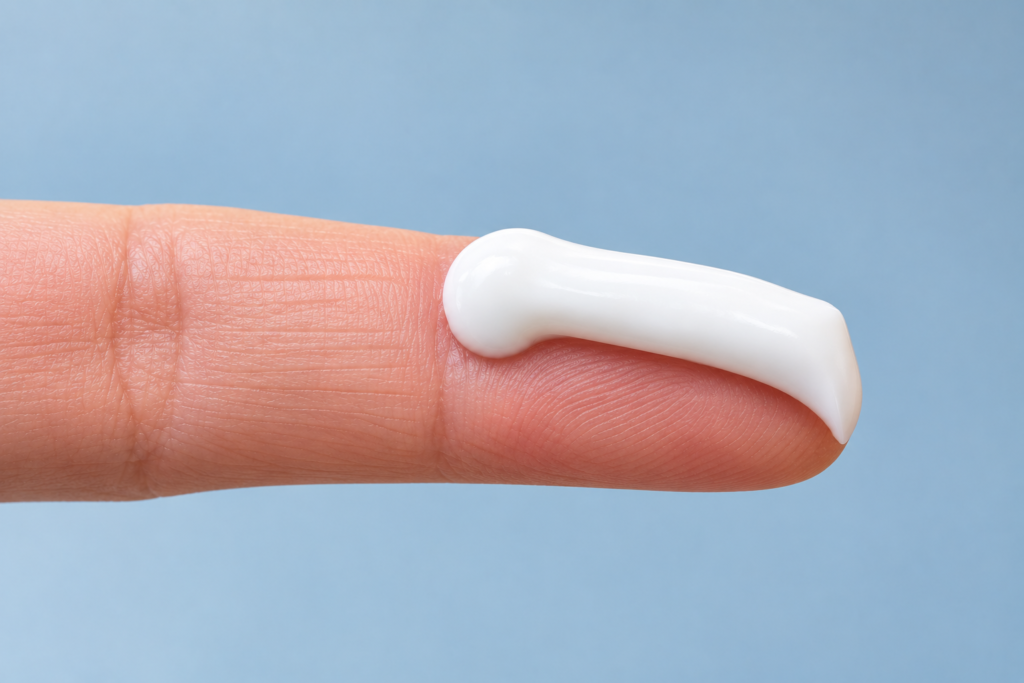
For prescription steroid creams, your doctor may also explain the Fingertip Unit (FTU) method.
A fingertip unit is the amount of cream or ointment squeezed from the tip of an adult's index finger to the first finger crease. One FTU is generally enough to cover an area of skin about the size of two adult palms.
The exact amount you need depends on the location and size of the affected area, so it's always best to follow your doctor's instructions.
Can You Use Steroid Creams for Too Long?
Yes.
Many steroid creams are intended for short-term use, particularly during flare-ups of inflammatory skin conditions.
Continuing treatment after your skin has improved, repeatedly treating yourself without a diagnosis, or using prescription-strength steroids for weeks or months without medical review can increase your risk of side effects.
This doesn't mean steroid creams are unsafe for long-term conditions such as eczema or psoriasis.
Some people do require intermittent or maintenance treatment over a longer period. However, this is usually done under medical supervision, where your doctor may:
- Reduce how often you apply the cream
- Switch to a milder steroid
- Alternate steroid treatment with non-steroidal medications
- Review your skin regularly
This personalised approach helps manage your condition while minimising unnecessary exposure to stronger medications.
What Are the Common Side Effects of Steroid Creams?
Most people who use steroid creams correctly experience few or no side effects.
When side effects do occur, they are usually limited to the area where the medication has been applied.
Common local side effects include:
- Skin atrophy
- Telangiectasia
- Striae
- Easy bruising
- Pigmentary change
- Acneiform eruptions
- Periorificial dermatitis / steroid rosacea
These side effects are more likely to occur when stronger steroids are used for prolonged periods, particularly on delicate areas such as the face, groin, or underarms.
Children are also more susceptible because their skin is thinner and absorbs medication more readily than adult skin.
Can Steroid Creams Cause Serious Side Effects?
Serious side effects from topical steroids are uncommon, especially when they're used as prescribed.
However, if potent steroid creams are applied over large areas of skin or used continuously for long periods, some medication may be absorbed into your bloodstream. In these situations, excessive absorption can rarely affect the body’s natural steroid hormone production and lead to systemic side effects.
Systemic complications are uncommon and are generally associated with inappropriate or prolonged use of high-potency steroid preparations.
This is one reason why stronger steroid creams should only be used under medical supervision.
Can Steroid Creams Be Used on the Face?
The skin on your face is thinner and more delicate than many other parts of your body.
As a result, it absorbs steroid medications more easily, making it more susceptible to side effects.
For this reason, dermatologists usually prescribe low-potency steroid creams for facial skin and recommend using them for a limited period.
Using strong steroid creams on your face without medical advice may increase your risk of:
- Skin thinning
- Rosacea-like rashes
- Acne-like breakouts
- Visible blood vessels
- Changes in skin pigmentation
You should also avoid applying steroid creams close to your eyes unless specifically instructed to do so by your doctor, as chronic repeated exposure may increase the risk of certain eye conditions.
What Is Topical Steroid Withdrawal?
For most people who use topical steroids for short periods, treatment can be stopped once the flare has settled, according to their doctor’s instructions.
Topical steroid withdrawal (TSW) is an uncommon condition that has been reported after prolonged and frequent use of topical corticosteroids, particularly moderate- to very-potent preparations used on sensitive areas such as the face.
Symptoms may include:
- Intense redness
- Burning or stinging
- Swelling
- Increased skin sensitivity
- Persistent itching
- Small bumps, oozing or peeling skin
These symptoms can overlap with a flare of the original skin condition, which can make TSW difficult to distinguish from recurrent eczema or another inflammatory skin disorder.
Importantly, worsening of eczema after stopping a topical steroid does not necessarily mean that topical steroid withdrawal has occurred. Eczema commonly relapses, particularly if the underlying inflammation has not been fully controlled or if maintenance treatment is still required.
If your skin becomes significantly worse after stopping prolonged or frequent topical steroid treatment, seek medical advice rather than repeatedly restarting, stopping or changing treatment on your own. A dermatologist can assess whether the symptoms are due to a recurrence of the underlying skin condition, topical steroid withdrawal, infection, or another cause.
When Should You See a Dermatologist?
Not every itchy rash or patch of inflamed skin requires specialist treatment. Many mild skin conditions improve with appropriate skincare or short-term treatment.
However, you should consider seeing a dermatologist if:
- Your skin condition does not improve after using the prescribed treatment.
- Your rash keeps coming back.
- You're unsure whether your skin condition actually requires a steroid cream.
- You require frequent treatment, your rash repeatedly returns, or you are unsure how to use topical steroids safely.
- Your skin becomes thinner, bruises easily, or develops other changes while using steroid creams.
- Your symptoms affect your sleep, daily activities, or quality of life.
- You think your medication may be causing side effects.
A dermatologist can examine your skin, confirm the diagnosis, and determine whether steroid treatment is appropriate. In some cases, they may recommend non-steroidal medications or other treatment options that are better suited to your condition.
Seeking medical advice is also important because many skin conditions can appear similar. What looks like eczema could actually be a fungal infection, psoriasis, rosacea, or another condition that requires a different treatment approach.
Frequently Asked Questions About Steroid Creams
Are steroid creams safe?
Yes. Steroid creams are generally safe when used correctly under medical supervision. Most side effects occur when stronger steroid creams are used more frequently than recommended or for prolonged periods without appropriate review.
Can steroid creams thin your skin?
They can, particularly if high-potency steroid creams are used repeatedly or for long periods. Skin thinning is much less likely when the correct steroid strength is used for the appropriate duration.
Can I use steroid creams on my face?
The skin on your face is thinner and absorbs medication more readily. For this reason, only low-potency steroid creams are usually recommended for facial skin, and they should only be used as directed by your doctor.
How long can I use a steroid cream?
The appropriate duration depends on your skin condition, the steroid's strength, and the area being treated. Some treatments only require a few days, while others may be used intermittently over a longer period under medical supervision. Always follow your doctor's instructions.
Can I stop using a steroid cream once my skin improves?
For many short-term treatments, yes. However, if you've been using stronger steroid creams for an extended period, your doctor may recommend reducing treatment gradually or adjusting your treatment plan. Speak to your doctor before making significant changes to long-term treatment.
What happens if I use too much steroid cream?
Occasionally applying slightly more than recommended is unlikely to cause serious problems. However, regularly using excessive amounts or continuing treatment for longer than advised may increase your risk of side effects such as skin thinning, stretch marks, and irritation.
Consult a Dermatologist
Steroid creams remain one of the most effective treatments for many inflammatory skin conditions. When used appropriately, they can reduce itching, redness, and inflammation while allowing your skin to heal more comfortably.
Like any medication, however, they should be used correctly. Choosing the right strength, applying the correct amount, and limiting treatment to the recommended duration all help reduce the risk of unwanted side effects.
If your skin condition keeps returning, isn't improving despite treatment, or you're concerned about using steroid creams safely, a proper assessment can help identify the underlying cause and determine the most appropriate treatment plan.
Dr Kong Yan Ling is a dermatologist who provides care across paediatric dermatology, general dermatology, aesthetic dermatology, and skin surgery. She completed her specialist dermatology training with top national examination honours and manages a wide range of skin, hair, and nail conditions using evidence-based treatment approaches.